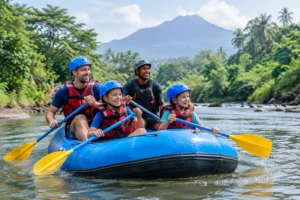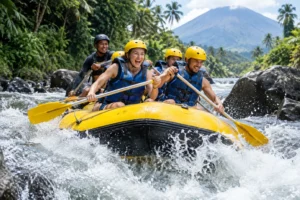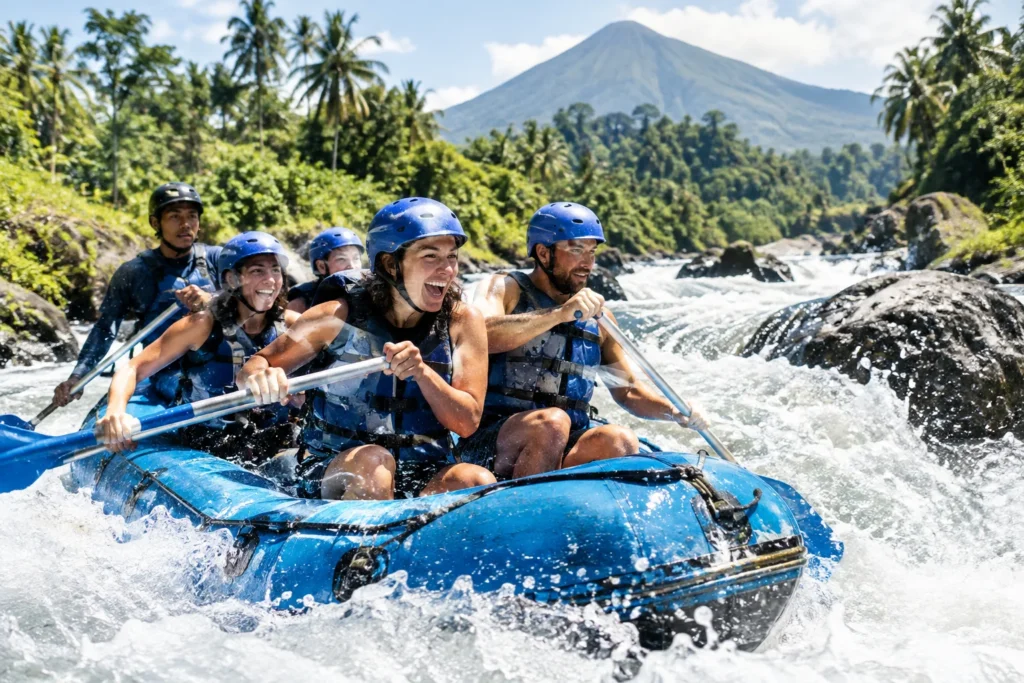
If you are looking at photos of white water rafting in Bali, you have probably seen two very different scenes. In one, a raft glides through a beautiful green valley while everyone smiles for the camera. In the next, the same raft appears to be swallowed by a wall of white water and someone is making a face usually reserved for surprise tax bills.
So, how difficult is white water rafting in Bali really? Is it a gentle outdoor activity, a serious physical challenge, or something in between?
The honest answer is that it depends on the river, water conditions, your comfort in the water, your fitness, and how well you follow the guide’s instructions. Many first-time visitors enjoy rafting without having previous experience, but that does not mean every route feels the same or that every person will find it equally easy.
This guide explains what makes rafting challenging, how Ayung River and Telaga Waja compare, what physical effort is involved, and how to choose an experience that suits your group. No superhero training montage is required, although being able to listen carefully is extremely useful.
Rafting difficulty is not measured by one thing alone. A river can have exciting rapids but a manageable overall trip, while another route may feel demanding because of its length, access, weather, or the amount of paddling involved.
The main factors are the size and character of the rapids, the speed and volume of the water, obstacles along the route, the distance covered, and how quickly the conditions can change. Rainfall upstream can affect water levels even when the sky above your hotel is bright blue. Rivers do not check your holiday itinerary before changing their mood.
Your own experience also matters. Someone who enjoys swimming, outdoor activities, and following physical instructions may feel comfortable quickly. Someone who is nervous around water may find the same rapid more intense, even if the technical difficulty is considered moderate.
It is also important to separate excitement from danger. A splash over the side of the raft can feel dramatic, but a dramatic moment does not automatically mean the route is unsuitable. Equally, a pretty river view does not mean you should ignore the safety briefing. The guide’s assessment of the river on the day is more important than an old video or a rating printed on a website.
You do not normally need to be an athlete to join a recreational rafting trip, but you should be comfortable with some physical activity. You may need to paddle when instructed, keep your balance, move carefully around the raft, and manage steps or uneven surfaces at the river access points.
The effort is usually intermittent rather than continuous. There may be periods of paddling, followed by calmer stretches where you can enjoy the scenery and catch your breath. Your guide will coordinate the group, so you are not expected to power the raft like an Olympic rowing team.
However, do not treat “not very demanding” as “no physical demands at all.” If you have a medical condition, recent injury, mobility limitation, or concerns about your ability to participate, speak with the operator before booking. Be honest about your situation. It is much better to ask a slightly awkward question in advance than to discover halfway down the river that your knee has filed a formal complaint.
Fitness is only one part of suitability. Confidence in water, ability to understand instructions, and comfort sitting in a moving raft are important too. Tell the operator if you cannot swim or feel anxious around water so they can explain the activity and its requirements clearly.
Ayung River is a popular choice for visitors who want a rafting experience surrounded by Ubud’s tropical scenery. The route is known for a combination of rapids, calmer sections, green river valleys, and natural features along the banks.
The rapids are commonly described in the lower-to-moderate range compared with more intense white-water routes, but the actual experience depends on river conditions and the section being operated. You should not assume that every rapid will feel identical on every visit. Water level, rainfall, and the guide’s route decisions can change the character of the trip.
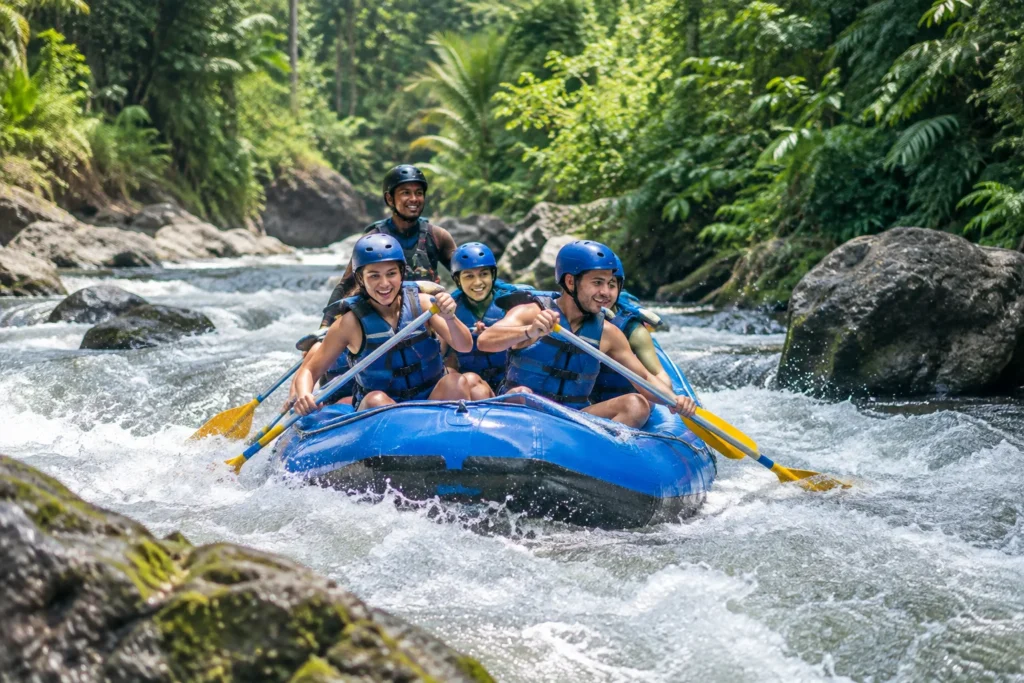
For many first-time guests, Ayung can be a comfortable introduction to rafting because the experience includes time to get used to paddling and responding to the guide. That does not mean it is a floating sightseeing cruise. You will still get wet, need to pay attention, and work with the other people in your raft.
Ayung may suit travellers who want a lively outdoor activity with a strong nature element. It can also be a good option for groups with mixed experience, provided everyone meets the operator’s requirements and is comfortable with the activity. If you want a closer look at the route, read our Ayung River rapids explained guide.
The best way to decide is to ask the operator about the current route, expected conditions, trip duration, access, and who should not participate. A river description is a guide, not a promise that the water will behave exactly the same every day.
Telaga Waja in East Bali is often chosen by travellers looking for a longer-feeling, more energetic white-water adventure. Its reputation comes from a series of rapids and a more adventurous river character. Some sections can feel faster and more powerful than what a first-time guest expects from a gentle scenic activity.
The route is frequently described as more challenging than Ayung, but the exact experience depends on water levels, operating sections, and the conditions on the day. The well-known features of the river should be discussed during the briefing; do not rely on a short social-media clip to judge whether the route is right for you.
Telaga Waja may appeal to people who enjoy active outdoor experiences and are comfortable following instructions in a moving-water environment. It may feel less suitable for someone who is very nervous, has concerns about physical ability, or simply wants a quieter introduction. That is not a judgement. Choosing the right adventure is smarter than choosing the one with the most dramatic thumbnail.
For a more detailed look, see our Telaga Waja rapids guide and our Ayung vs Telaga Waja comparison. These articles can help you understand the differences before you book.
In broad terms, Ayung is often the more approachable choice for visitors who want a first rafting experience with a balance of rapids and scenery. Telaga Waja is often selected by guests looking for a more energetic ride. But “easier” is personal, and no online comparison can replace a proper briefing and current river assessment.
Think about what you want from the day. If you prefer a scenic adventure and are new to rafting, ask whether the Ayung route is suitable for your group. If you are more interested in a stronger white-water feel and are comfortable with active participation, ask about Telaga Waja.
Also consider the journey to the river, the total time you have available, the facilities, and the physical access at the start and finish. A route that sounds perfect on paper may not be the best choice if the transfer makes your day too rushed.
For a deeper side-by-side overview, our article Telaga Waja vs Ayung for families covers another useful angle. If you are travelling with children, check the operator’s current age and participation rules rather than assuming that a child who can swim is automatically eligible.
Many recreational rafting guests are first-timers. Previous rafting experience is not always required, because guides normally provide an introduction before the trip. You should be shown how to use the paddle, where to sit, how to respond to commands, and what to do if the raft moves through a rapid.
A good briefing should be clear enough for everyone to understand. If you do not understand a command, ask the guide to repeat or demonstrate it. Do not nod politely while secretly hoping the river has subtitles.
Being a beginner does not mean you should ignore your own comfort level. If you are frightened of water, cannot swim, or have a health concern, tell the operator before you arrive. Ask what flotation equipment is supplied and what the trip involves. Our guide to Ayung rafting for beginners and our article about non-swimmers and rafting provide more context.
The guide’s instructions are not optional suggestions. They are part of how the group moves together and responds to changing conditions. Listen carefully, paddle when asked, and keep your attention on the guide rather than on the person in the next raft who is attempting a one-handed selfie.
Before departure, the operator should explain the activity and provide appropriate safety equipment, including a properly fitted life jacket and helmet where required for the trip. The guide should explain how the equipment is worn, how to use the paddle, where to position yourself, and what commands you may hear.
Check that your life jacket is fastened and fits securely. If something feels loose or uncomfortable, ask for help adjusting it before entering the river. A helmet should also fit correctly. Equipment is useful only when it is suitable and worn as instructed.
Listen to the safety talk even if you have rafted elsewhere. Procedures can differ between operators and rivers. Ask what the guide expects if someone loses balance, falls into the water, or feels unwell. For a general overview of the gear, read our article about rafting safety equipment.
For broader water-safety information, the American Red Cross water-safety guidance is a useful reference. The American Canoe Association resource library also provides paddlesport education and safety resources. These are general references; always follow the local operator’s briefing and the guide’s instructions for your specific river.
No operator can honestly promise that an outdoor activity has zero risk. What you can do is choose a responsible provider, understand the route, use the equipment correctly, and follow the guide.
Rain can affect river conditions, but the relationship is not as simple as “rain means dangerous” or “sunshine means safe.” Rainfall upstream can raise water levels, increase current, and change the appearance of rapids. Conditions can also vary between different sections of the same river.
The operator should monitor conditions and make decisions about whether a trip can proceed. Routes may be adjusted, delayed, or cancelled if conditions are unsuitable. Guests should respect those decisions, even if they have already put on their adventure outfit and announced to Instagram that today is their brave era.
If you are concerned about the weather, contact the operator before departure and ask about the current river status and cancellation or rescheduling arrangements. Our article about what happens when it rains on rafting day explains this in more detail.
Do not judge river safety only by the weather outside your hotel. A dry morning in Ubud does not tell you exactly what has happened in the river’s upper catchment.
A little preparation can make the experience more comfortable. You do not need specialist equipment, but you should arrive ready to move, listen, and get wet.
Wear secure clothing that can handle water and choose footwear that stays on your feet. Avoid loose sandals that may disappear downstream and begin a new life as a river explorer. Leave valuables and unnecessary items somewhere safe. If you are bringing glasses, ask the operator about securing them; our guide to wearing glasses while rafting covers practical options.
Eat sensibly before the activity. A very heavy meal immediately before rafting may not be comfortable, but arriving hungry is not a clever strategy either. Drink water, follow the operator’s arrival instructions, and tell the guide about any relevant medical or mobility concerns.
Most importantly, do not arrive intoxicated or participate if you are unwell. Follow all age, health, and participation requirements. If you are travelling with children, check the minimum age and supervision rules directly with the operator before making a booking.
Rafting is not suitable for every person in every circumstance. Someone with a recent injury, certain medical conditions, significant mobility limitations, or a strong fear of moving water may need to avoid the activity or obtain professional advice before booking.
Pregnancy, heart conditions, back or neck problems, and other health concerns should be discussed with a qualified healthcare professional and the rafting operator. The operator can explain its rules and the physical nature of the route, but it cannot diagnose whether an activity is medically safe for you.
If you are uncertain, do not hide the concern just to keep the group booking. Ask before paying. A responsible decision might be to choose a different activity, a different route, or simply enjoy a relaxed day on land. Bali has plenty of adventures; there is no prize for forcing yourself into the wrong one.
Start with your group, not the most exciting photograph. Consider whether everyone is comfortable around water, whether anyone has health or mobility concerns, and whether you want a scenic introduction or a more energetic ride.
Then compare the details that affect the day: river location, transfer time, activity duration, access to the river, facilities, equipment, guide arrangements, and what is included in the price. Ask how the operator handles changing weather and what happens if conditions are unsuitable.
Do not compare providers on price alone. A very low price may not include the same transport, facilities, equipment, or service as another package. Read the inclusions carefully and ask questions if anything is unclear. Our guide to Bali rafting prices can help you understand what to check.
You can start by exploring the available experiences on the Bali White Water Rafting homepage, then review the rafting activity and booking details. Confirm the route and current requirements with the operator before finalising your plans.
### Is Ayung River rafting easy for beginners?
It is often considered an approachable option for first-time visitors, but it is still an active river activity. Conditions vary, and every participant must follow the guide’s briefing and meet the operator’s requirements.
### Is Telaga Waja more difficult than Ayung?
Telaga Waja is commonly chosen for a more energetic white-water experience, while Ayung is often viewed as the more approachable scenic option. The actual difficulty depends on the river conditions, operating section, and the participant.
### Do I need to know how to swim?
Swimming ability and operator rules are important considerations, but requirements can differ. Tell the operator honestly if you cannot swim and ask about suitability and safety procedures before booking.
### How physically demanding is rafting?
Expect some paddling, balance, movement, and the ability to follow instructions. It is not usually an endurance race, but it is not a passive boat ride either.
### Can I choose the easiest river?
You can ask the operator which available route best matches your experience and comfort level. The final decision should also consider the river conditions on the day.
### What if the river conditions change?
The operator may adjust the trip, delay departure, or cancel if conditions are unsuitable. Follow the operator’s advice rather than relying on weather apps or conditions at your hotel.
White water rafting in Bali can be an enjoyable first-time adventure, but the difficulty depends on more than the name of the river. Ayung is often a good starting point for travellers looking for a scenic and approachable experience. Telaga Waja is often preferred by guests seeking a more energetic ride. Neither description replaces the operator’s assessment of current conditions.
Be honest about your fitness, confidence in water, and any health concerns. Ask questions, listen to the briefing, wear your equipment correctly, and follow your guide’s instructions. That is a much better plan than trying to look fearless while holding a paddle backwards.
If you are ready to compare your options, visit the Bali White Water Rafting homepage and check the rafting booking information. Choose the river that suits your group, not the one that makes the loudest splash in a video. The best rafting day is the one you enjoy, remember, and finish with a big smile—not a story that begins, “So, we ignored the guide…”
Instant confirmation • Licensed operator • Zero stair climb on Ayung
Book Now Chat on WhatsApp