It is one of the questions many first-time rafters quietly wonder about: what if I fall out of the raft? You may be imagining a dramatic movie scene, a slow-motion splash, and your sunglasses disappearing into the jungle forever. The real experience is usually less cinematic. Still, knowing what to expect can help you stay calm and follow your guide’s instructions.
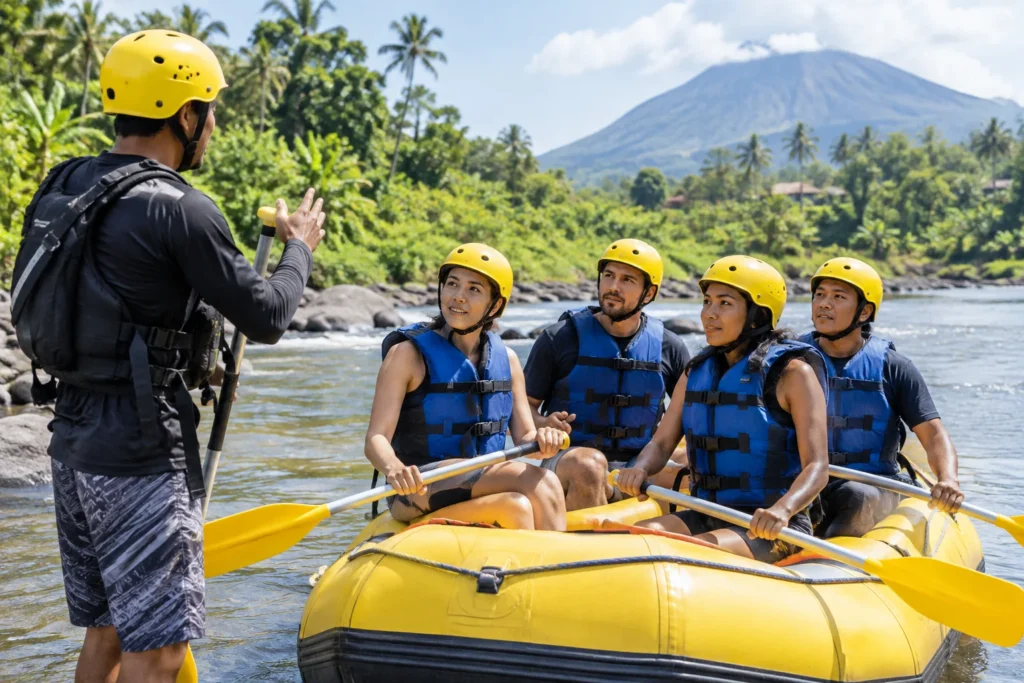
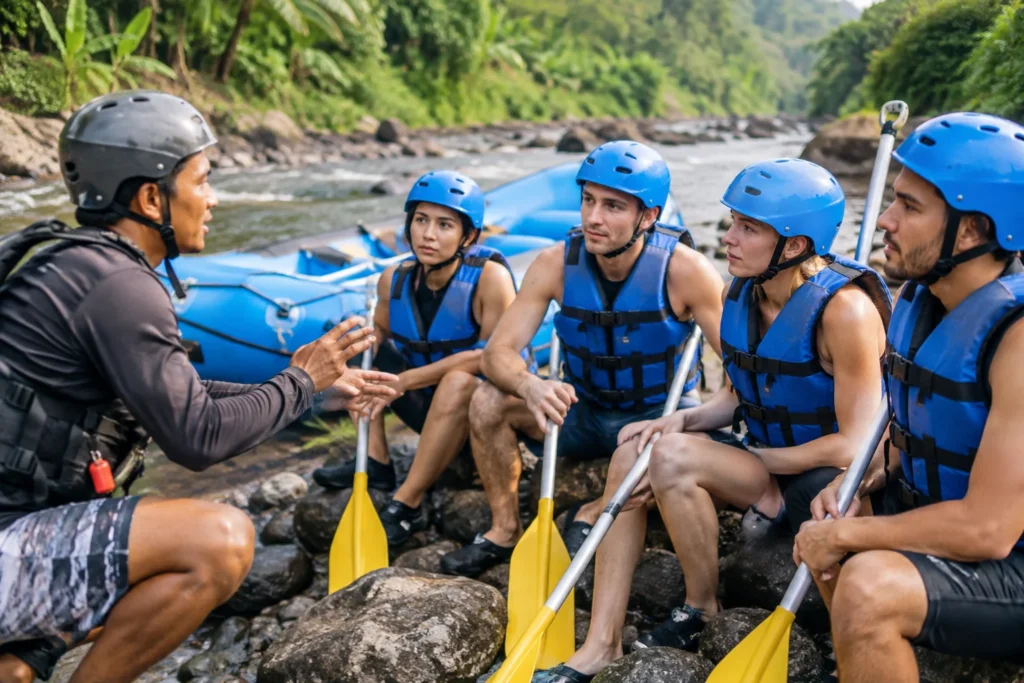
On Bali’s rivers, rafting guides brief guests before the trip and provide safety equipment such as a helmet and a properly fitted life jacket. Conditions, river levels and operating procedures can vary, so the guide’s instructions on the day always come first. This article explains the general process—not a substitute for your operator’s safety briefing.
Rafting takes place in moving water, and a bump or a sudden splash can sometimes send a participant out of the raft. Guides train for situations like this and will direct the group on what to do. The important thing is not to panic, not to fight the current unnecessarily, and to listen for the guide’s instructions.
Your life jacket is there to provide flotation when it is correctly fitted and worn as instructed. It is not an invitation to ignore the briefing or treat the river like a swimming pool. Think of it as your safety partner—not a magical force field with a customer-service hotline.
Every river situation is different. Follow the commands given by your guide, who can see the conditions and the position of the raft. During the safety briefing, ask the guide to explain the local procedure for an unexpected fall into the water.
These are general reminders, not a complete rescue technique. Your guide’s briefing is the one to remember. If a command is unclear, ask for it to be repeated before the trip starts. Nobody gets bonus points for pretending to understand river-safety instructions.
The guide will assess the situation and direct the recovery. Depending on the river section and conditions, the raft may be brought alongside you or the guide may use another procedure. Do not grab equipment, ropes or another person unless the guide tells you to do so.
Getting back aboard can require teamwork. Listen carefully, follow one instruction at a time and let the guide coordinate the movement. It is not a competition to climb back in first—and the river is a terrible place to audition for an action movie.
That depends on what happened, how everyone is feeling and the guide’s assessment of the conditions. The guide may pause the trip, check that participants are okay, adjust the plan or end the activity if necessary. Be honest if you feel unwell, have swallowed water, are injured or feel too shaken to continue.
Never feel pressured to continue just because the rest of the group wants to move on. Your comfort and safety matter more than keeping the schedule perfectly on time.
No guide can promise that a participant will never get splashed or lose balance. You can, however, reduce avoidable risks by following the briefing and working with the team.
Both Ayung River and Telaga Waja are popular rafting choices in Bali, but they have different river characteristics and trip experiences. The water level, weather and route conditions can also change. Do not assume that a technique or instruction from one river applies automatically to another.
Before choosing a trip, ask the operator about the route, current conditions, minimum age and any participation requirements. You can read more about the available Bali white water rafting options and compare the experience that suits your group.
Tell your guide. It is a perfectly reasonable question, especially if this is your first rafting trip. A good briefing should explain the equipment, commands, expected river conditions and what the group should do if someone leaves the raft.
You can also read general water-safety advice from the American Red Cross water safety guidance. For your actual rafting activity, always follow the local operator’s briefing and the guide’s instructions.
There is no single version of a raft incident. A person might lose balance when the raft moves over a wave, slip while following a guide’s instruction, or end up in the water during a rapid. Sometimes the person is close to the raft; sometimes the guide needs to manage the group and the river position before anyone can be brought together again.
This is why a useful safety briefing explains more than just how to hold a paddle. It should cover the commands used by the guide, how to sit securely, what to do when the raft approaches a rapid and how the operator handles an unexpected fall. If the briefing feels too quick, ask questions before setting off. It is much easier to ask beside the river than while the river is doing its best impression of a washing machine.
One important general principle in moving-water safety is to avoid trying to stand in fast current unless a qualified guide specifically directs you to a safe place. Water can push against your legs, and feet may become caught between rocks or other obstacles. What looks shallow from the raft can still have force.
Do not copy something you have seen in a movie or a social-media clip. River conditions are not a stunt scene, and advice that works in calm water may be dangerous in a rapid. Listen to the guide, keep your flotation equipment on and follow the operator’s local procedure.
If another participant falls into the water, the rest of the group should stay focused on the guide. Do not all lean over one side, jump in after them or start paddling in different directions. Sudden, uncoordinated movement can make the raft less stable and make the guide’s job harder.
Wait for clear instructions. The guide may ask the group to paddle, hold position or move in a particular way. Follow only the command given and avoid reaching for the person unless the guide directs you to. The best help from the rest of the team is calm cooperation—not five people trying to become rescue heroes at the same time.
Once the immediate situation is under control, the guide should check how the participant is feeling and decide whether it is appropriate to continue. Tell the guide if you have hit something, feel pain, are dizzy, are unusually cold, have trouble breathing or have swallowed water and feel unwell. Do not hide symptoms because you do not want to delay the group.
Depending on the circumstances, the guide or operator may pause the trip, arrange assistance, change the route or finish the activity. The right decision depends on the person’s condition and the river situation. A timetable is never more important than a guest’s wellbeing.
No. A life jacket is an important piece of safety equipment, but it does not remove every risk. It must fit correctly, be fastened as instructed and be suitable for the activity. It also does not replace the guide, the briefing or good judgement.
Tell the operator if you cannot swim or are not confident in water before booking and again before departure. Ask what flotation equipment is provided, what the trip involves and whether the operator considers the activity suitable for you. Do not assume that every river, route or water condition is the same.
You do not need to deliver a long interview at the riverbank. A few clear questions are enough to make sure you understand the basics:
A professional guide should be willing to explain the procedure in language you understand. If you are travelling with children or someone who is nervous, make sure they hear the briefing too. A quick explanation can make the whole group more confident.
Ayung River and Telaga Waja offer different rafting environments, and the best choice depends on your group’s preferences, experience and the conditions on the day. Rather than choosing only by the most dramatic photo, ask about the route, expected difficulty, trip duration, safety briefing, equipment and age or health requirements.
If you are comparing options, start with our Bali white water rafting homepage for an overview of the available experience. You can also explore the Bali rafting activity details before deciding which trip suits your plans.
For general background beyond rafting, the American Red Cross water-safety guidance offers useful reminders about being careful around water. For the activity itself, your local rafting guide’s briefing and instructions take priority.
Falling out of a raft can be startling, but you do not need to spend the whole journey imagining the worst. Wear your safety equipment correctly, pay attention during the briefing, follow your guide’s commands and speak up if something is unclear. The goal is to enjoy Bali’s river scenery and rapids—not to become the day’s unexpected swimming instructor.
Instant confirmation • Licensed operator • Zero stair climb on Ayung
Book Now Chat on WhatsApp