If you have been researching Ayung River rafting tours, you have probably seen the terms “Grade II” and “Grade III” thrown around. But unless you are a professional kayaker, those numbers probably mean absolutely nothing to you. Is Grade III going to flip the boat? Is Grade II just a lazy river float?
Understanding the Ayung River rapids is the key to booking with confidence. In this technical breakdown, we translate the International Scale of River Difficulty into real-world feelings, so you know exactly what your body, your kids, and your adrenaline levels are about to experience on the water.
Rivers around the world are classified using the International Scale of River Difficulty. According to the safety and classification guidelines published by American Whitewater, a leading global authority on river conservation and safety, rapids are graded from I (flat water) to VI (unrunnable waterfalls).
The Ayung River sits comfortably in the Grade II to Grade III range. Here is what that actually means for your trip.
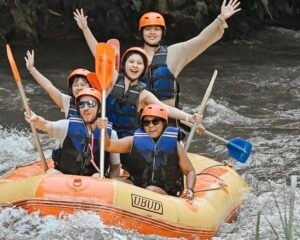
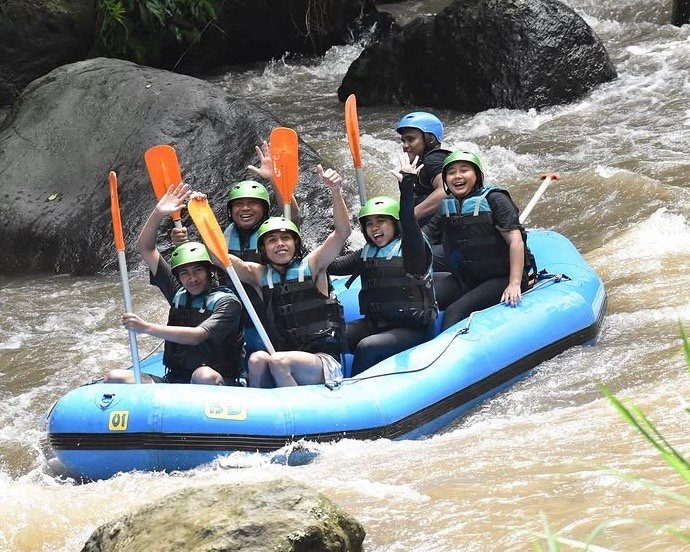
Grade II rapids are considered “Novice” or “Beginner” level. On the Ayung River, these make up about 60% of your journey.
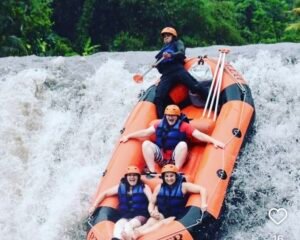
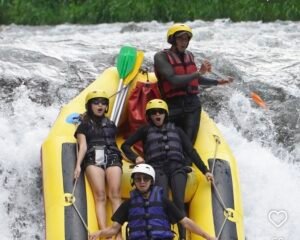
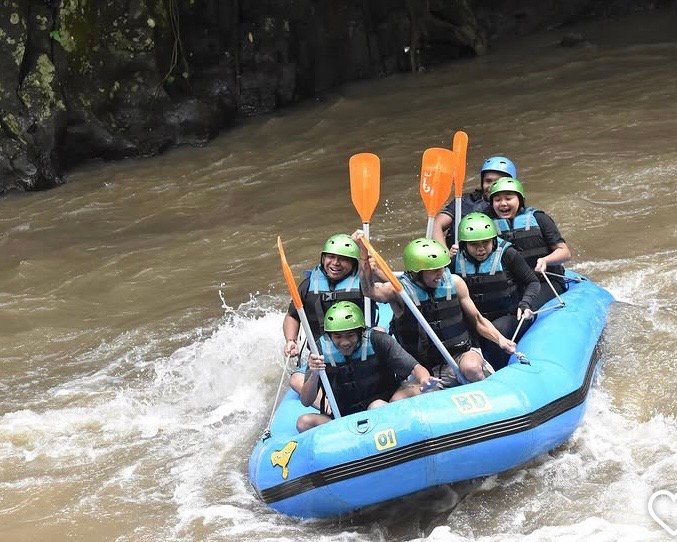
Grade III rapids are classified as “Intermediate.” These are the sections your guide will warn you about right before you enter them. They make up about 30% of the Ayung trip.
River guides often give fun names to the biggest rapids to build anticipation. While the Ayung doesn’t have massive, deadly drops like the Telaga Waja, it has a few iconic Grade III features:
The final “rapid” of the Ayung trip isn’t actually a rapid at all — it’s the finish line. Unlike many rivers in Bali that require you to climb hundreds of exhausting concrete stairs while carrying wet gear, the Ayung River basecamps are built directly on the riverbank. You literally drift out of the final Grade II ripple and step straight onto dry land to grab your cold drink. This “zero-step” access is a massive reason why the Ayung remains the #1 choice for families and seniors.
The Ayung River rafting experience is a masterclass in balance. It offers enough Grade III action to give you a genuine adrenaline rush and great vacation photos, but enough Grade II calm water to let you catch your breath, look at the ancient stone carvings, and actually enjoy the jungle. It is the ultimate “Goldilocks” river — not too scary, not too boring.
🌊 Conquer the Ayung Rapids via WhatsApp
No. The Ayung River strictly features Class II and Class III rapids. If you are looking for extreme Class IV or V white water with massive drops and high risk of flipping, you should book the Telaga Waja River instead.
It is extremely rare for a commercial raft to flip on the Ayung River. The rafts are large, self-bailing, and heavily weighted with passengers. As long as the crew follows the guide’s weight-distribution commands, the raft will easily punch through Grade III waves.
Yes, children aged 5 and older safely navigate Ayung’s Grade III rapids every day. Guides seat children in the middle of the raft (the most stable position) and give clear instructions to hold the safety ropes before the bigger drops.
Ready to step up from Grade III to Bali’s most intense water? See how the Telaga Waja Grade III–IV rapids compare to the Ayung.
Instant confirmation • Licensed operator • Zero stair climb on Ayung
Book Now Chat on WhatsApp