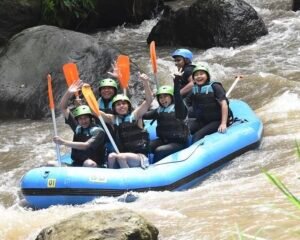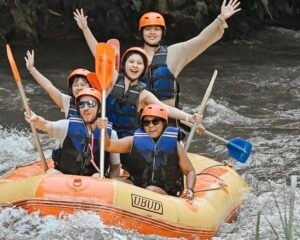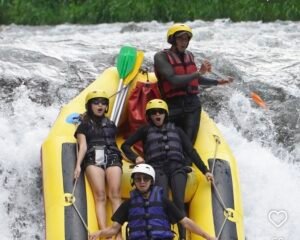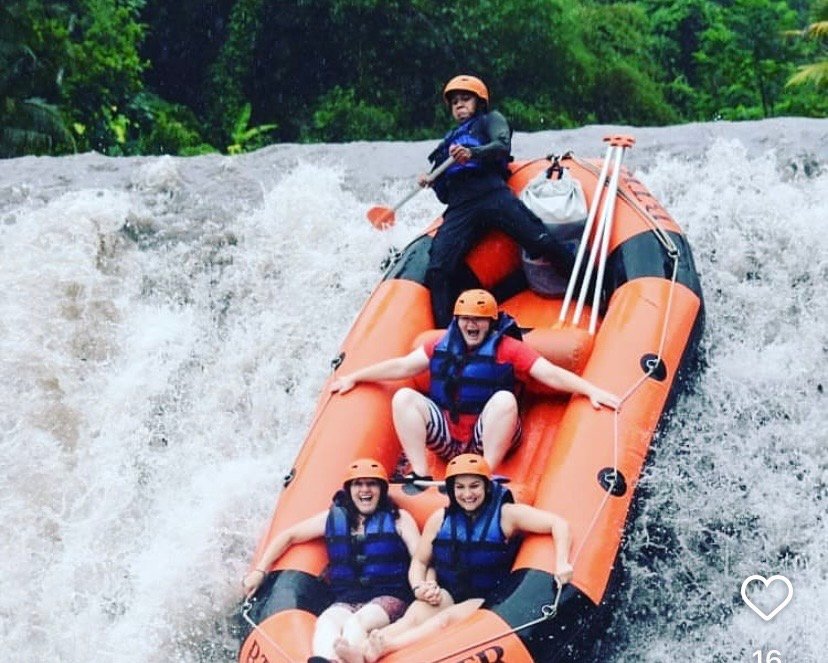
If the Ayung River is Bali’s friendly jungle rollercoaster, then the Telaga Waja is its untamed older sibling. When you see “Grade III–IV” on a booking page, your brain immediately asks: how violent is this really? What actually happens at the 4-meter dam drop? Can the raft flip?
As the licensed operator running daily trips down East Bali’s most intense river, we are here to translate the Telaga Waja rapids from technical jargon into exactly what your body will feel. By the end of this guide, you will know every major rapid by name — and understand exactly why thousands of thrill-seekers call this the best 2.5 hours of their entire Bali trip.
Quick recap of the International Scale of River Difficulty (we covered the full breakdown in our Ayung River rapids guide):
Here is the critical difference: on the Ayung, Grade III is the peak. On the Telaga Waja, Grade III is the baseline — the “rest” section between the Grade IV monsters.
From the launch point, the Telaga Waja immediately switches on. Unlike rivers with long calm pools, this river chains rapid into rapid. Your crew will be paddling almost non-stop for the first hour.
Two fan-favorite Grade III features our guides love to announce:
Then come the heavy hitters. These are the sections your guide briefs you on with a serious face:
These rapids are completely runnable and safe — but only with a synchronized crew. This is exactly why our guides rehearse commands during the briefing and why we never launch an uncooperative boat into Grade IV water.
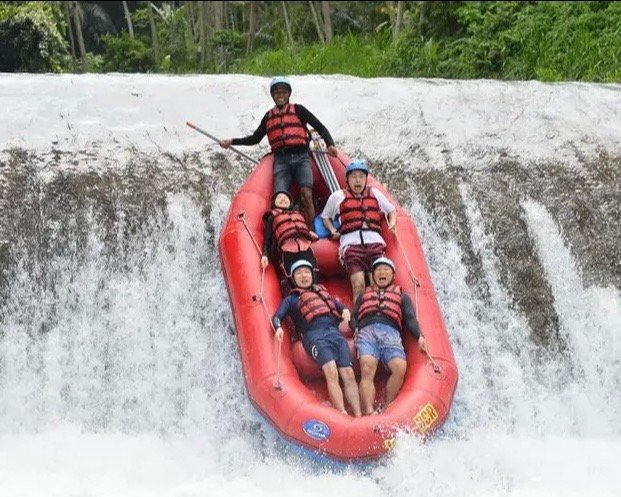
Every Telaga Waja rafting trip ends with the moment legends are made of: a controlled 4-meter plunge over a natural dam. Here is exactly how it works:
Want to hear how guests describe the moment their raft left the lip of the dam? Read the full experience in our honest Telaga Waja rafting review.
One detail that surprises every first-timer: the water is crystal clear. The Telaga Waja is fed directly by mountain springs on the slopes of Mount Agung, not by muddy lowland runoff. The trade-off? The splashes are noticeably colder than the Ayung — a refreshing shock at 10:00 AM that turns into pure joy by rapid number three.
Be honest with your group before booking. The Telaga Waja is perfect for fit adults, active teenagers, and repeat rafters chasing their next fix. It is not the right river for:
Intensity without safety is recklessness — and we don’t do recklessness. Every Telaga Waja trip runs on a strict safety stack: buoyancy aids certified to the international life jacket standards published by the International Organization for Standardization (ISO), EN 1385 impact-rated helmets, rescue kayakers stationed at every Grade IV feature, and a mandatory pre-launch briefing documented in our official safety & waiver protocol.
The Telaga Waja does not hand you an easy day — it makes you work for it, and that is exactly why the finish-line cheers are so loud. If your group wants the most intense, most memorable white water Bali can offer, this is the river.
🌊 Conquer the Telaga Waja Rapids via WhatsApp
Ready to earn your story? Book your Telaga Waja rafting trip with a licensed operator and feel the dam drop for yourself.
The Telaga Waja features continuous rapids for nearly its entire 16-kilometer course, including multiple named Grade III sections and several Grade IV features such as “The Wall” and “Triple Drop”, finishing with the famous 4-meter dam drop.
Yes. The dam drop is a controlled maneuver performed square-on to the dam face under direct guide command, with safety kayakers positioned in the splash pool below. All guests wear ISO-certified buoyancy aids and EN 1385 helmets throughout.
Fit, confident beginners who follow guide commands precisely can complete the trip safely. However, nervous first-timers and non-swimmers will have a much better experience on the Ayung River, which caps out at Grade III with calm recovery sections.
The Telaga Waja is fed by mountain springs on the slopes of Mount Agung rather than lowland runoff, which keeps the water crystal clear. The mountain source also makes the splashes noticeably colder and more refreshing than lower-elevation rivers.
Instant confirmation • Licensed operator • Zero stair climb on Ayung
Book Now Chat on WhatsApp