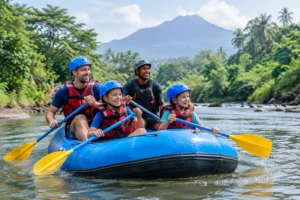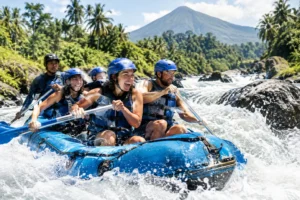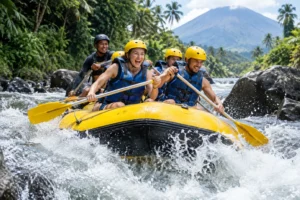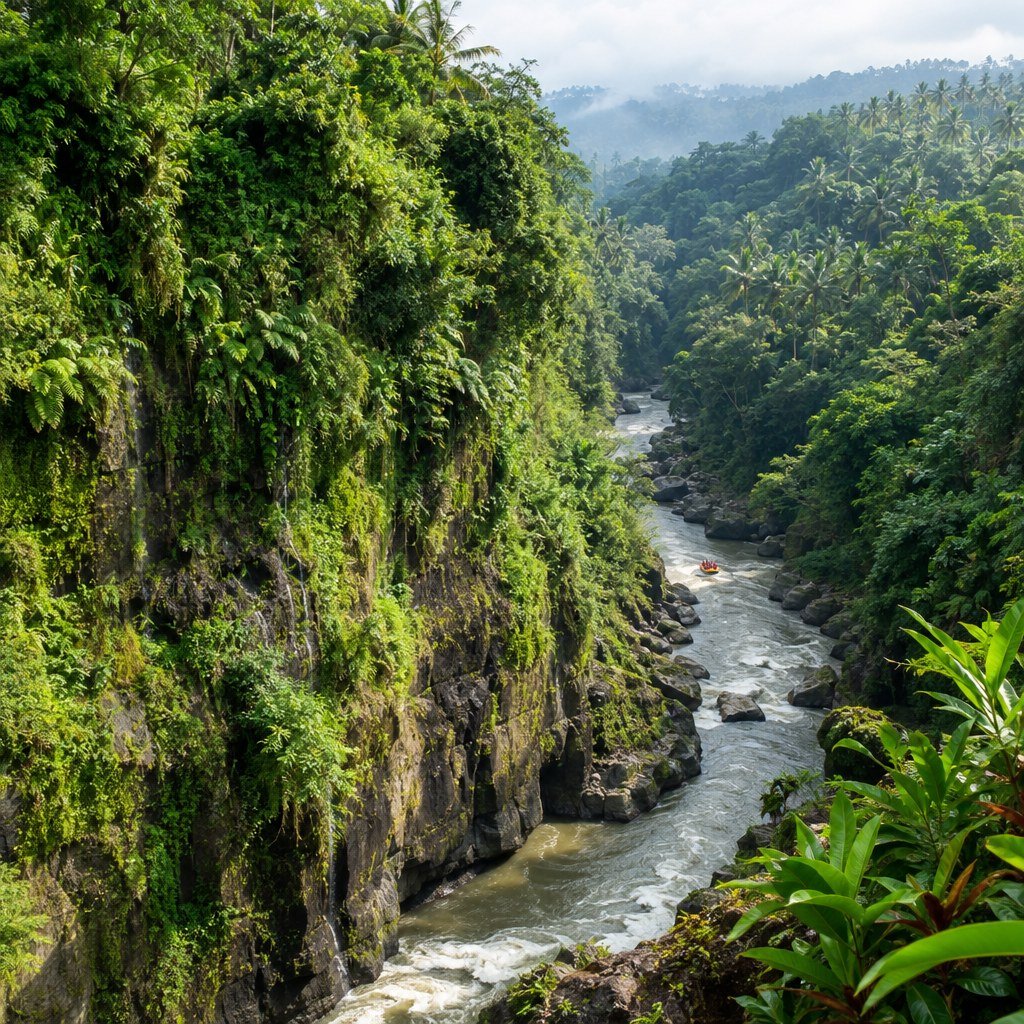
If you have never been rafting before, the Ayung River is one of the easier places in Bali to consider for a first experience. The trip combines moving water, jungle scenery and guided rafting, but you are not expected to handle the river on your own.
For most first-timers, the bigger question is not whether you have rafting experience. It is whether you are comfortable with an outdoor activity that involves paddling, getting wet and following your guide’s instructions.
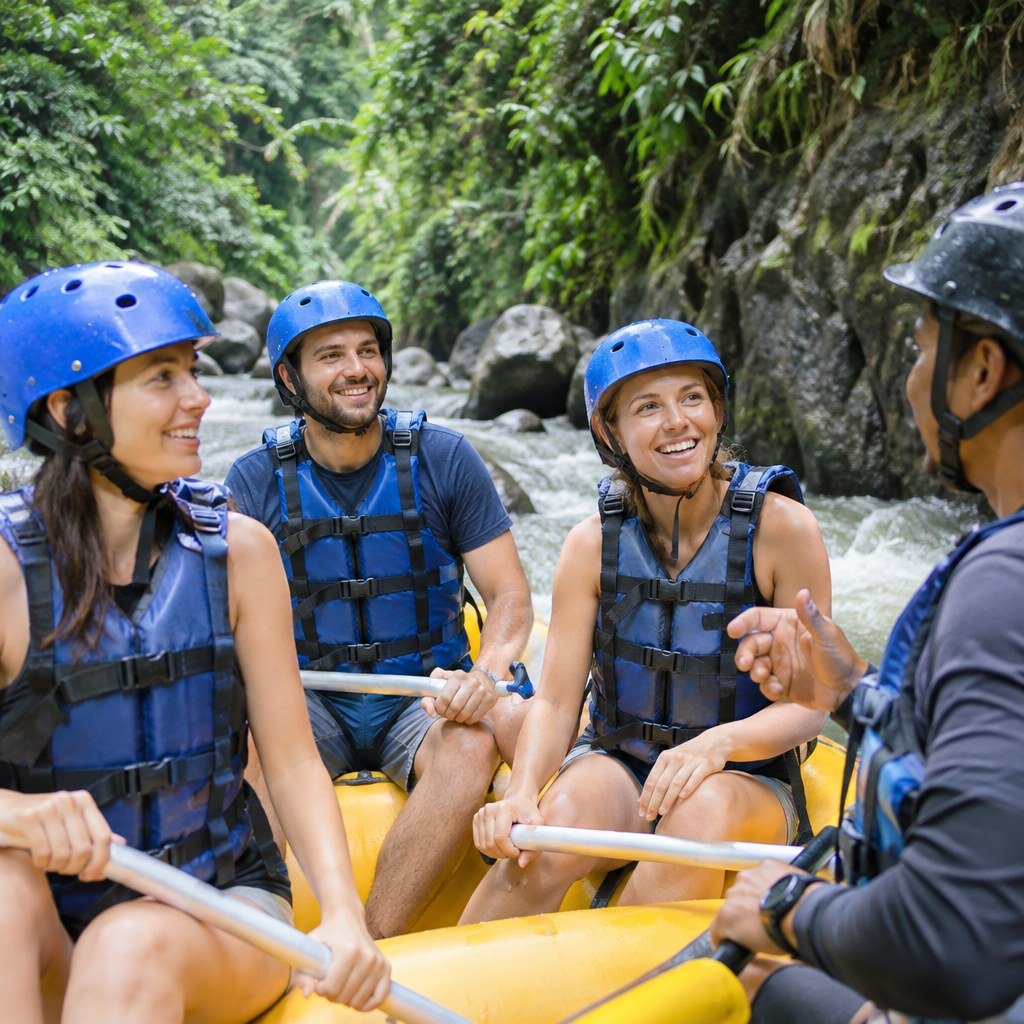
For a beginner, Ayung rafting is generally approachable because you are part of a guided group. The guide gives instructions before and during the trip, while the group works together to paddle the raft.
You do not need previous white water rafting experience. What matters more is listening carefully, following the safety briefing and communicating with the guide if you are uncomfortable or need help.
The river experience also has moments between rapids, so it is not simply continuous intense paddling from start to finish.
Ayung rafting is a mixture of paddling, small rapids, river scenery and quieter stretches of water. The route passes through a lush tropical environment, which is part of the appeal for people who want more than an adrenaline-focused activity.
A typical Ayung rafting experience is around 2 hours on the river. The complete activity takes longer because you also need time for registration, equipment, safety preparation, showering, changing and lunch.
If you are planning your day around the activity, our guide on how long white water rafting in Bali takes explains the difference between river time and the full experience.
This depends on your comfort level with moving water, but beginners regularly choose Ayung because the experience is guided rather than self-directed.
The river includes sections with rapids and changing water movement. You should expect the raft to move, bounce and splash. That is part of the activity. However, the guide is there to explain what the group needs to do and how to work together.
If you want a more detailed explanation of the river’s rapids, see our Ayung River rapids breakdown.
Being a confident swimmer is not the same thing as being an experienced rafter. Rafting participants wear safety equipment and receive instructions before entering the river, but you should still tell the operator if you are not comfortable in deep or moving water.
If this is your main concern, our article about whether non-swimmers can do white water rafting in Bali covers the question in more detail.
You should expect some physical effort. Paddling requires repeated movement from your upper body and core, and you may need to follow quick instructions during sections of faster water.
That does not mean you need to be an athlete. A normal level of mobility and the ability to participate in a group outdoor activity are more relevant than fitness training.
One practical point is that you should be prepared to get wet. Wear suitable clothing and footwear, and avoid bringing valuables onto the river.
First-time rafters often feel more relaxed once they understand the process. Before the rafting starts, you normally register, receive the required equipment and listen to a safety briefing.
The guide explains how to hold the paddle, how to respond to instructions and what to do during different situations on the river. This preparation is important because everyone in the raft needs to work together.
For broader information about responsible travel and activities in Bali, the official Indonesia Travel website is also a useful non-commercial reference for planning your trip.
Expect a combination of activity and scenery rather than a nonstop race down the river.
That combination is one reason Ayung can work well for people who want to try rafting without choosing the most aggressive-looking adventure available.
It depends on what you want from the day. Ayung is often a strong choice if you care about jungle scenery, a guided introduction to rafting and a convenient Ubud-area adventure.
Telaga Waja is associated with a more energetic rafting experience, so travelers who specifically want bigger thrills may prefer it.
Our Ayung vs Telaga Waja comparison breaks down the differences more directly.
Ayung may not be the right choice for everyone. If you are looking specifically for a very intense adventure, you may want to compare the available rivers before booking.
Likewise, if you have a medical condition, injury or physical limitation that could make paddling or outdoor activity difficult, get appropriate professional advice and check the operator’s current requirements before booking.
For families, age requirements and safety arrangements should also be checked before making a reservation rather than assumed from a general description online.
Yes. It can be a good introduction to white water rafting because the activity is guided and beginners can learn the basic paddling and safety instructions before entering the river.
It can feel exciting when the raft reaches faster water, but the guide manages the group and explains what to do. Your personal comfort with moving water will also affect how intense it feels.
The river portion is approximately two hours. The full experience takes longer because of preparation, changing, showering, lunch and transportation.
Both can be considered, but they offer different experiences. Ayung is particularly appealing if you want tropical scenery and a guided introduction around the Ubud area.
If you are curious about white water rafting but do not want to start by chasing the most extreme experience, Ayung is a sensible place to look. You get a real river adventure, teamwork, rapids and tropical scenery while having a guide with you throughout the activity.
Take a little time to check the route, inclusions, pickup arrangements and current requirements before booking. When you are ready, you can compare Bali white water rafting options and choose the experience that fits your day.
Instant confirmation • Licensed operator • Zero stair climb on Ayung
Book Now Chat on WhatsApp