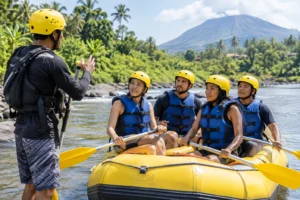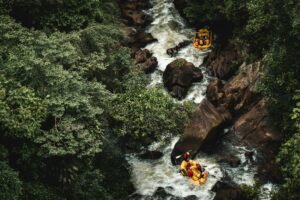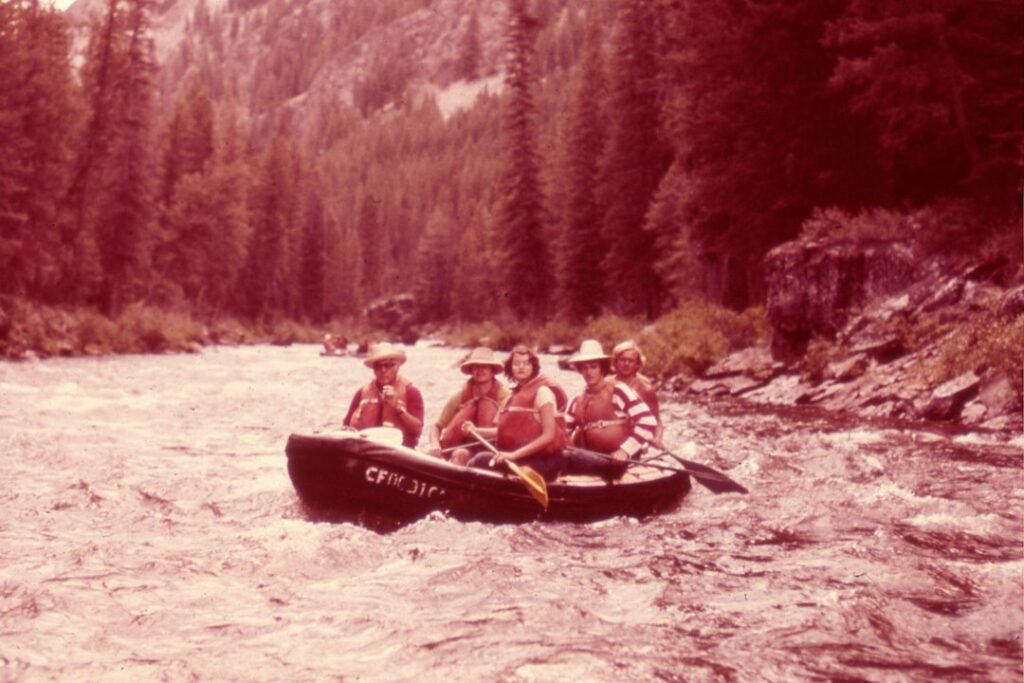
If you wear prescription glasses, you may be wondering whether you can keep them on during a white water rafting trip in Bali. The short answer is that it may be possible, but you should plan carefully: glasses can slip, get splashed, or fall into the river when the raft hits a rapid. Your best option depends on your prescription, how securely your glasses fit, and the rafting operator’s safety instructions.
This guide explains practical ways to protect your glasses, alternatives to consider, and what to ask before booking your trip. If you are comparing river experiences, start with our Bali white water rafting options and choose an activity that matches your comfort level.
Many people do wear prescription glasses for outdoor activities, and some may be able to wear them while rafting. However, there is no guarantee that ordinary glasses will stay in place in moving water. Waves, sudden movement, wet frames, and adjusting your helmet can all make them easier to dislodge.
Always follow your rafting guide’s instructions. If the guide recommends removing glasses for a particular section, explain that you need them to see clearly and ask what safe options are available. Do not compromise your vision just to protect a pair of glasses; being able to understand instructions and see hazards matters.
A snug sports strap or retainer designed for your frame can reduce the chance of losing your glasses. Choose one that holds the frames comfortably against your head without interfering with your helmet or head movement. Fit it before you reach the river, and test that it stays secure when you bend and turn your head.
A strap lowers the risk of losing your glasses, but it does not make them indestructible or guarantee they will stay on in every rapid. Ask your guide whether your setup is suitable before getting into the raft.
If you raft often, prescription sports glasses with a secure fit may be more practical than everyday frames. Look for impact-resistant lenses and a design intended for active use. Water-resistant features can help with splashes, but no eyewear should be assumed to be waterproof unless the manufacturer specifically says so.
Contact lenses may be convenient for some participants, but they are not the right choice for everyone. Water can irritate your eyes, and contact lenses should not be exposed to untreated river water. If you normally wear contacts, ask your eye-care professional how to manage them during water activities and bring clean supplies and a spare pair of glasses for after the trip.
Bring a hard case and leave it with your belongings in a secure, dry place according to the operator’s instructions. Do not put everyday glasses loose in a pocket or leave them where they can fall out. If you need glasses to navigate safely on land, keep a backup pair available for before and after rafting.
Tell the operator before the activity if your vision is significantly reduced without your glasses. Explain whether you can safely follow spoken instructions and identify people or objects at a distance. The guide can tell you what arrangements are possible for that trip, but they cannot assess your eyesight or replace advice from an eye-care professional.
If you cannot see well enough to follow safety instructions without your glasses, do not simply remove them and hope for the best. Ask about secure eyewear, an appropriate alternative, or whether rafting is suitable for you. Safety requirements can vary by operator, river conditions, and the equipment available.
Fresh water splashes are not usually the main concern; losing the glasses or scratching the lenses is often the bigger practical risk. River water can carry sediment, and wiping wet lenses with clothing or a rough towel may scratch them. If your glasses get wet, rinse them with clean water when available and use a clean microfiber cloth, following the lens manufacturer’s care instructions.
Do not use your shirt, paper tissue, or gritty fabric to rub muddy lenses. If the frames become loose or a lens is damaged, stop and ask for help rather than trying to repair them while the raft is moving.
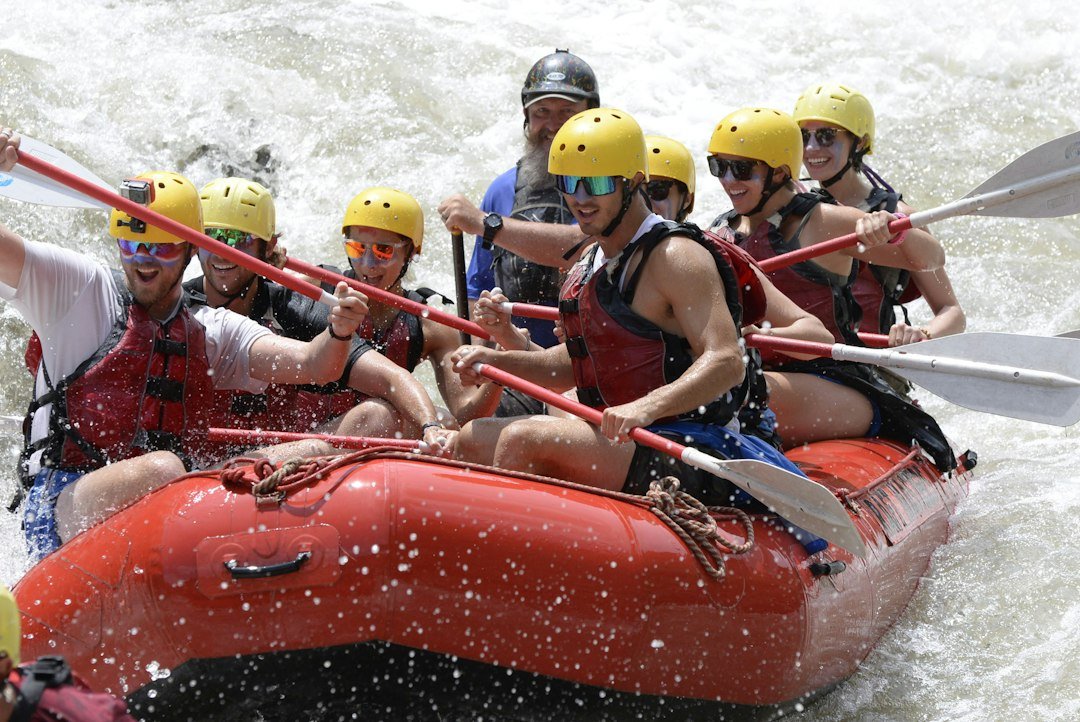
Before confirming a booking, ask a few straightforward questions:
It is also worth reviewing general river safety advice from the U.S. National Park Service’s whitewater safety guidance. Conditions and rules differ between destinations, so use it as general background and follow your local guide’s instructions in Bali.
Both the Ayung River and Telaga Waja River offer memorable rafting experiences, but the feel of a trip can differ with the route, water level, and conditions on the day. Do not choose a river based on eyewear alone. Tell the operator about your vision needs and ask which available trip is appropriate for your group.
If you are still deciding between the two rivers, read our comparison: Ayung vs Telaga Waja rafting. For practical details about your first trip, you can also read what to bring for rafting in Bali.
Your usual glasses may be comfortable for driving or sightseeing, but rafting brings different challenges. Frames may move when you get splashed, and you may instinctively reach up to adjust them at the wrong moment. Before the trip, check that the nose pads and temples fit securely and that the frames do not slide when you look down.
A sports retainer is a useful precaution, but fit matters. A strap that is too loose may not help much, while one that is too tight can be uncomfortable under a helmet. Try the combination of glasses, strap, and helmet before boarding. If the helmet presses against the frames or changes their position, tell the guide and ask for help adjusting the equipment.
If your prescription glasses are also sunglasses, consider whether the lenses make it harder to see shaded areas or changing light along the river. Ordinary sunglasses can also be lost in the water, so use a secure retainer and follow the operator’s guidance. Avoid wearing expensive or irreplaceable eyewear if you have a suitable alternative that lets you see clearly and fits safely.
Do not wear eyewear that restricts your vision, slips over your eyes, or interferes with the helmet. If glare or light sensitivity is a concern, ask your optometrist about appropriate sports eyewear before the activity rather than improvising on the day.
Can I wear my normal prescription glasses while rafting in Bali?
Possibly, provided they fit securely and your rafting operator permits them. Ordinary glasses can slip or be lost in moving water, so use a suitable sports retainer and ask your guide to check that it does not interfere with your helmet.
Will a glasses strap stop my glasses from falling off?
A well-fitted strap can reduce the risk, but it cannot guarantee that your glasses will stay on or avoid damage in every rapid. Check the fit before entering the river and follow the guide’s instructions.
Are contact lenses better than glasses for white water rafting?
It depends on your eyes and what your eye-care professional recommends. Contact lenses can be exposed to river water, which may cause irritation or infection. Ask your optometrist about water-activity precautions and never rinse contact lenses with river water.
Can I take my glasses off during the rafting trip?
Only if you can do so safely and your guide agrees. If removing them means you cannot see clearly enough to follow instructions, explain this before the trip and discuss a safer eyewear option with the operator.
What if I lose my glasses in the river?
Tell your guide when it is safe to do so and follow their instructions. Do not attempt to search for lost glasses while the raft is moving or put yourself at risk to recover them. Keep a spare pair in a secure place for after the activity if you rely on prescription eyewear.
Should I tell the rafting company before booking?
Yes, especially if you cannot see well without your glasses or need a specific eyewear arrangement. The operator can explain its equipment and rules, although only an eye-care professional can advise on your individual vision needs.
You may be able to go white water rafting in Bali while wearing prescription glasses, but ordinary frames can be lost or damaged in moving water. A properly fitted sports retainer, suitable eyewear, and a conversation with your operator can help you make a safer plan. If you are unsure whether you can participate comfortably, ask your eye-care professional and the rafting operator before booking.
Ready to explore your options? Visit our Bali rafting website to review available experiences and contact the team with any questions about your needs before your trip.
Instant confirmation • Licensed operator • Zero stair climb on Ayung
Book Now Chat on WhatsApp