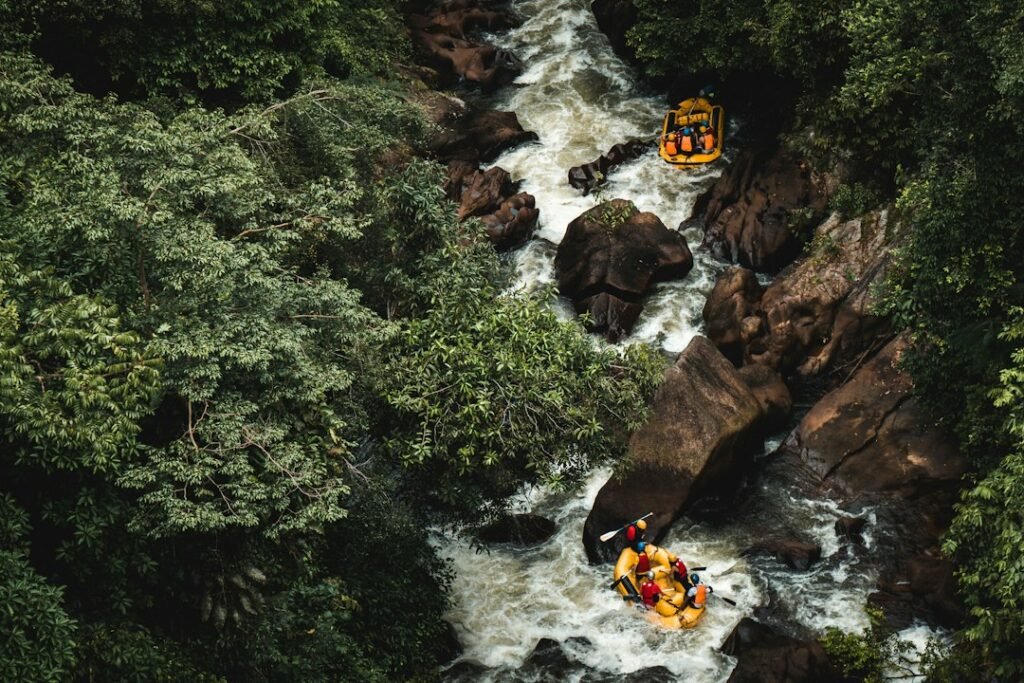
You have booked a rafting trip in Bali, packed your swimwear, and then you wake up to the sound of rain. Should you cancel your plans? Not necessarily. Rain does not automatically mean that white water rafting will be cancelled, but it can affect river conditions and the operator’s decision to run a trip.
The important difference is between ordinary rainfall and conditions that make a river unsafe. This guide explains what may happen if it rains on your rafting day, who decides whether the activity can go ahead, what to do if your trip is delayed, and how to prepare without making assumptions about the weather.
Sometimes, yes. Light or moderate rain does not necessarily stop a rafting trip. Rafting takes place on a river, so getting wet is already part of the experience. However, rain can change visibility, water levels, current strength and the amount of debris in the river.
Operators assess conditions before deciding whether a departure can proceed. The decision should be based on the actual river and weather situation, not simply on whether rain can be seen from your hotel. Conditions may also differ between locations: it can be raining in one part of Bali while another area has different weather.
For a rafting trip, the more important question is what the rain is doing to the river. Heavy or prolonged rainfall can cause water levels to rise, currents to become stronger, and floating branches or other debris to enter the route. Conditions upstream may also affect a section of river even when the weather at the rafting base looks calm.
That is why guests should not judge river safety from the appearance of the sky or the water at the starting point. The rafting operator and guide must assess local conditions and follow their operating and safety procedures. If they decide that the river is not suitable, the activity should be delayed, changed or cancelled according to the operator’s policy.
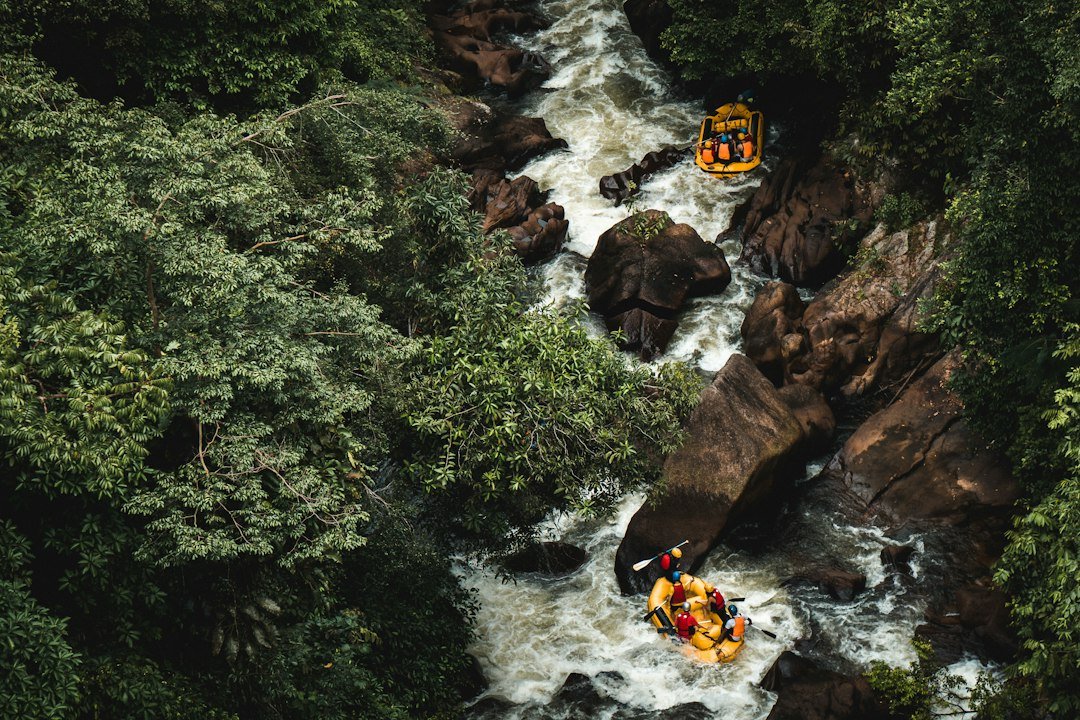
If rain starts before your scheduled departure, the operator may take one of several approaches depending on the conditions and its procedures:
These are possible outcomes, not a promise that every operator follows the same process. Ask your provider how it communicates weather-related changes and what happens to your payment if the trip cannot operate.
Weather can change during an outdoor activity. If rain begins after your raft has launched, stay calm and pay attention to your guide. Do not make independent decisions about where to paddle, when to stop or whether to leave the raft. The guide is responsible for directing the group according to the conditions and the operator’s safety procedures.
If you notice a sudden change in the water, feel unwell or are worried about the conditions, tell your guide clearly. Follow instructions immediately, keep your safety equipment properly fitted, and avoid distracting other participants. Never attempt to continue downstream or reach the riverbank on your own unless the guide instructs you to do so.
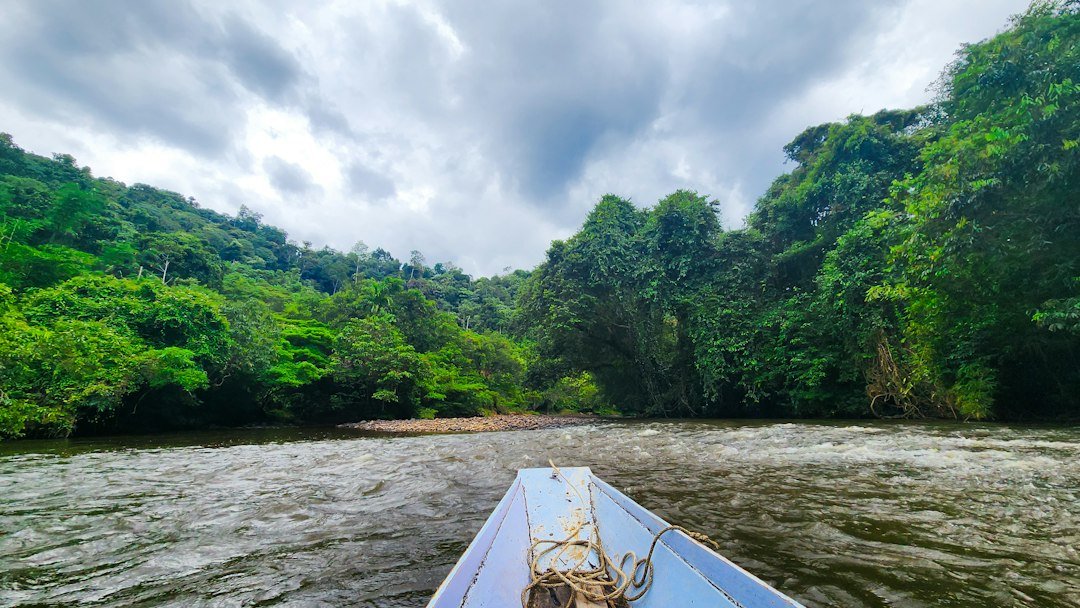
Before cancelling by yourself, contact the operator. A rain shower at your accommodation does not tell you exactly what the river conditions will be at the activity location. Ask whether the departure is still scheduled, whether the team has checked the river, and when you can expect a final update.
Also check the cancellation terms attached to your booking. A guest-requested cancellation may be treated differently from an operator cancellation due to unsafe conditions. Refunds, rescheduling, credit and notice periods vary by provider, so read the terms that apply to your reservation rather than assuming that rain automatically qualifies for a refund.
You do not need to bring a suitcase of rain gear, but a little preparation can make the day more comfortable if the operator confirms that the trip is going ahead.
A weather forecast is useful for planning your day, but it cannot confirm whether a particular rafting route is safe to operate. Forecasts cover an area and a time period; river conditions can respond to rainfall elsewhere in the catchment as well. Use the forecast as background information and contact the operator for the latest activity update.
For an official local forecast, you can check the Indonesian Agency for Meteorology, Climatology and Geophysics (BMKG). For broader seasonal planning, read our guide to rafting in Bali during the rainy season. That article covers the seasonal question, while this page focuses on what to do when rain affects the day of your booking.
Rainfall does not affect every river in exactly the same way. Ayung River and Telaga Waja have different locations and catchment areas, so local rainfall and river conditions may not be identical. A forecast for Ubud, for example, should not be treated as a complete picture of conditions on another river elsewhere in Bali.
Do not assume that one route will always operate just because another route is open. Ask the operator about the specific river you have booked, and follow its latest operational advice. You can compare the general characteristics of both routes in our guide to Ayung vs Telaga Waja rafting.
Keep the operator’s contact details available on the day and make sure your booking phone number is correct. If you are using hotel pickup, do not leave the meeting point or change your plans without informing the team.
Not automatically. Light rain may not prevent a trip, but heavy rainfall or unsafe river conditions can lead to a delay or cancellation. The operator should assess the conditions for the specific route and departure.
Heavy rain can change water levels, current strength and debris conditions. Whether a trip can operate must be decided by the operator using its safety procedures and local river assessment. Guests should not decide that a river is safe based only on how it looks.
It depends on the booking terms and whether the guest or operator cancels. Rain alone may not trigger a refund. Check the provider’s policy for operator cancellations, rescheduling and guest-requested changes before booking.
Ask the operator what clothing is recommended. You will get wet during rafting regardless, and bulky rainwear may not be useful on the raft. A dry change of clothes and a towel for afterwards are usually more practical items to prepare.
Yes. Weather can vary between areas of Bali. However, conditions upstream may also affect a river, so local sunshine at the meeting point does not by itself prove that the route is safe. Always confirm with the operator.
If it rains on your Bali rafting day, do not panic and do not assume the trip is automatically cancelled. Contact the operator, ask for an update on the specific river, and follow the team’s decision. If conditions are unsuitable, safety must come before the schedule.
When you are ready to plan your activity, explore the available Bali white water rafting packages. Check the inclusions, transfer details and booking conditions, and keep some flexibility in your day in case the weather changes.
Instant confirmation • Licensed operator • Zero stair climb on Ayung
Book Now Chat on WhatsApp