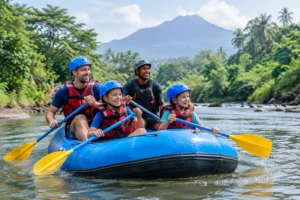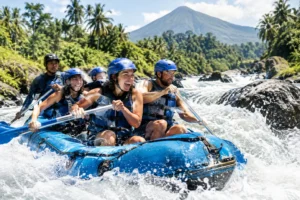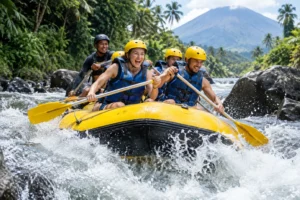
Telaga Waja rafting can be an option for first-timers, but beginners should understand the style of trip before booking. The river is often marketed for its lively rapids and longer advertised route, so it may feel more action-focused than a scenic float. Whether it is a good match depends on the operator’s route, current water conditions, your comfort with active outdoor activities and the advice of the rafting company.
You do not need to be an experienced paddler to join many guided rafting trips, but you do need to listen carefully, follow instructions and be comfortable participating in a group activity on moving water. If you are nervous, tell the operator before booking rather than assuming every beginner experience is the same.
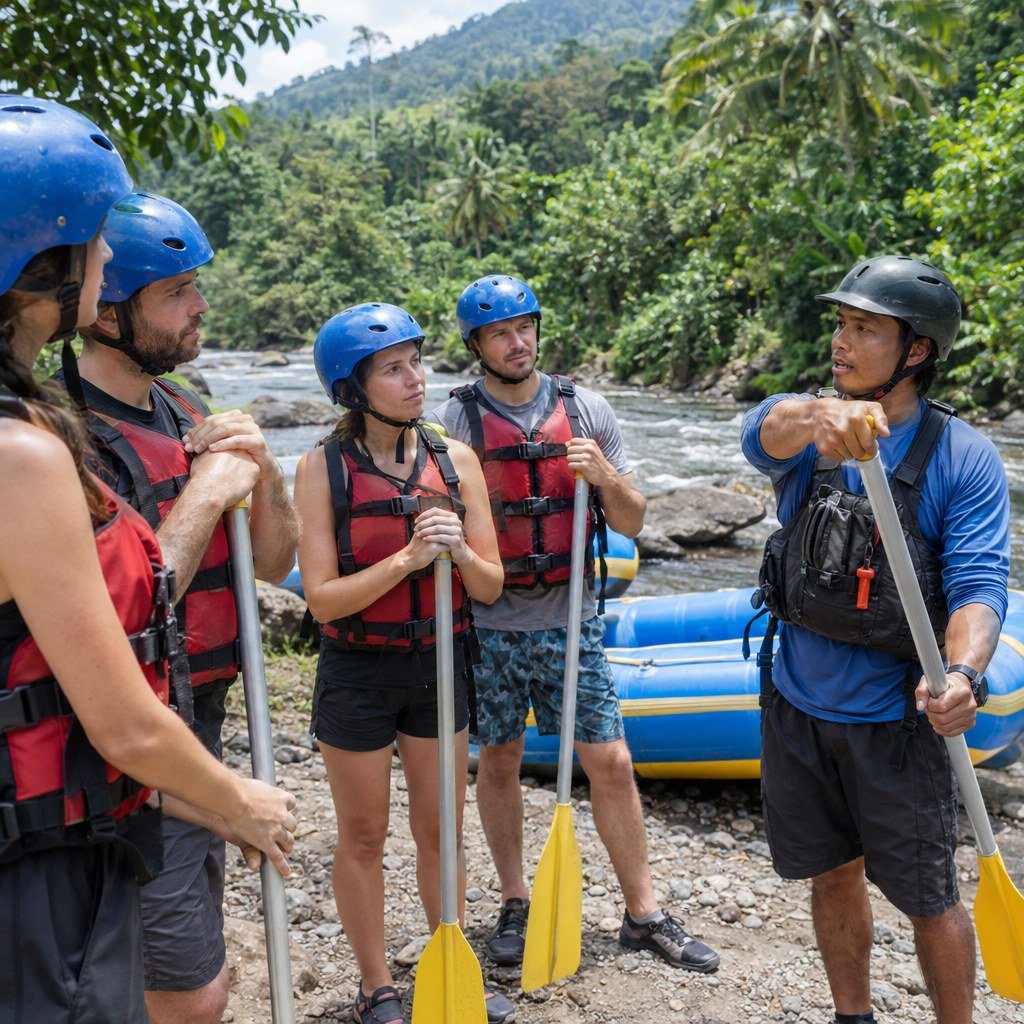
Most commercial rafting experiences start with registration and preparation at the operator’s base. You should receive equipment and a safety briefing before going onto the river. The guide explains how to hold the paddle, respond to commands, balance in the raft and behave if someone falls into the water. The exact process and equipment depend on the operator.
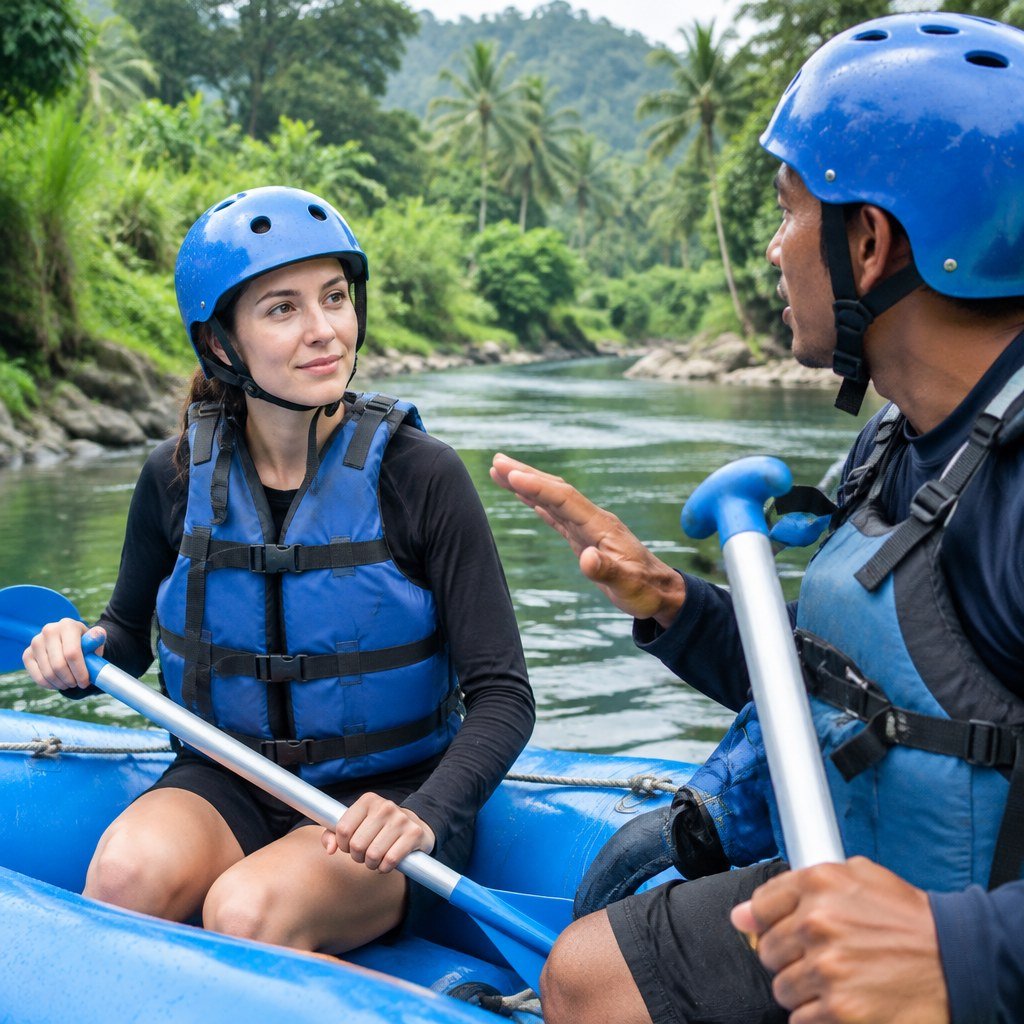
Once on the river, you may paddle through calmer stretches between rapids. Guides give instructions as the raft approaches more active sections. You should expect to get wet, work with the other people in your raft and pay attention throughout the trip. Do not treat the guide’s instructions as optional, even if a section looks easy.
Telaga Waja is commonly promoted for energetic rapids, and some operators describe sections using rapid grades. However, a grade or marketing label is not a complete prediction of what you will experience on your date. Water level, rainfall, route choice and operator procedures can change the feel of a trip.
Read our Telaga Waja rapids explainer for background, but ask the company running your trip to describe current conditions and whether they recommend the route for someone with no previous rafting experience. If you want a gentler-feeling introduction or are uncertain about the level of activity, compare Ayung River rafting as well.
Rafting is a physical activity. You may need to paddle, maintain balance, climb in and out of the raft and follow instructions on uneven or wet surfaces. You do not need to train like an athlete for every commercial trip, but you should be honest about your mobility, stamina and any health conditions that could affect participation.
Swimming requirements and policies vary by operator, so do not assume that non-swimmers are accepted everywhere or that a life jacket removes every risk. Tell the operator if you cannot swim and ask whether the specific trip is appropriate. Review the company’s age and health restrictions before making a payment.
Clear answers are a good sign that you are making an informed choice. If the operator brushes off reasonable safety questions or cannot explain its requirements, consider another option.
Choose clothing that is comfortable when wet and secure enough for paddling. Follow the operator’s footwear guidance; avoid bringing items that could fall out of pockets or become damaged in the water. Pack a change of clothes and a towel if the company recommends them, and leave valuables secured rather than carrying them on the raft.
Our what to wear for rafting in Bali guide and rafting packing checklist cover the basics. The operator’s own instructions should take priority because facilities and procedures vary.
For some beginners, Ayung is appealing because of its jungle scenery and its convenient location for many visitors staying in Ubud. It is often marketed as a scenic river trip, although it still involves moving water, paddling and following a guide’s instructions. Do not assume that scenic automatically means easy or risk-free.
Telaga Waja may suit beginners who specifically want a more energetic adventure and are comfortable with the operator’s description of the route. If you prefer to keep transfers short from Ubud, Ayung may also make the day simpler. Compare both rivers in our Ayung vs Telaga Waja comparison.
Many Telaga Waja bases in East Bali take roughly 1.5–2 hours to reach from central Ubud in normal conditions. That estimate varies with your accommodation, operator base, traffic and pickup route. A long drive may be fine if rafting is the main activity of your day, but it is worth considering if you are already tired or travelling with people who do not enjoy winding roads.
Ask whether hotel pickup and return transport are included, what time the driver expects to collect you, and how long the full outing normally takes. Avoid scheduling an important appointment or flight too close to the estimated return.
For general information about planning a Bali trip, visit the Bali White Water Rafting Adventure homepage and the official Indonesia Travel website.
Telaga Waja can be worth considering as a first rafting experience if you want an active trip and the operator confirms that its route and current conditions are suitable for you. If you are unsure, compare it with Ayung and ask specific questions before paying. The best first trip is one where you understand the challenge, know what is included and feel comfortable following the guide’s instructions.
Instant confirmation • Licensed operator • Zero stair climb on Ayung
Book Now Chat on WhatsApp