
You can bring your phone to a Bali rafting trip, but taking it onto the river is a different question. You will get splashed, and your raft may pass through rough water, so a phone can be damaged or lost even if you are careful. For most visitors, the sensible choice is to keep the phone safely stored during the rafting section and take photos before or after the activity.
Storage arrangements vary by operator and package. Before leaving your hotel, check whether your rafting base provides lockers, whether you can keep valuables there, and whether any waterproof storage is available during the trip.
That depends on the operator’s rules and how you plan to secure it. A phone in a normal pocket is at risk of falling out, getting soaked or being damaged by an impact. Even a water-resistant phone is not guaranteed to survive every rafting situation.
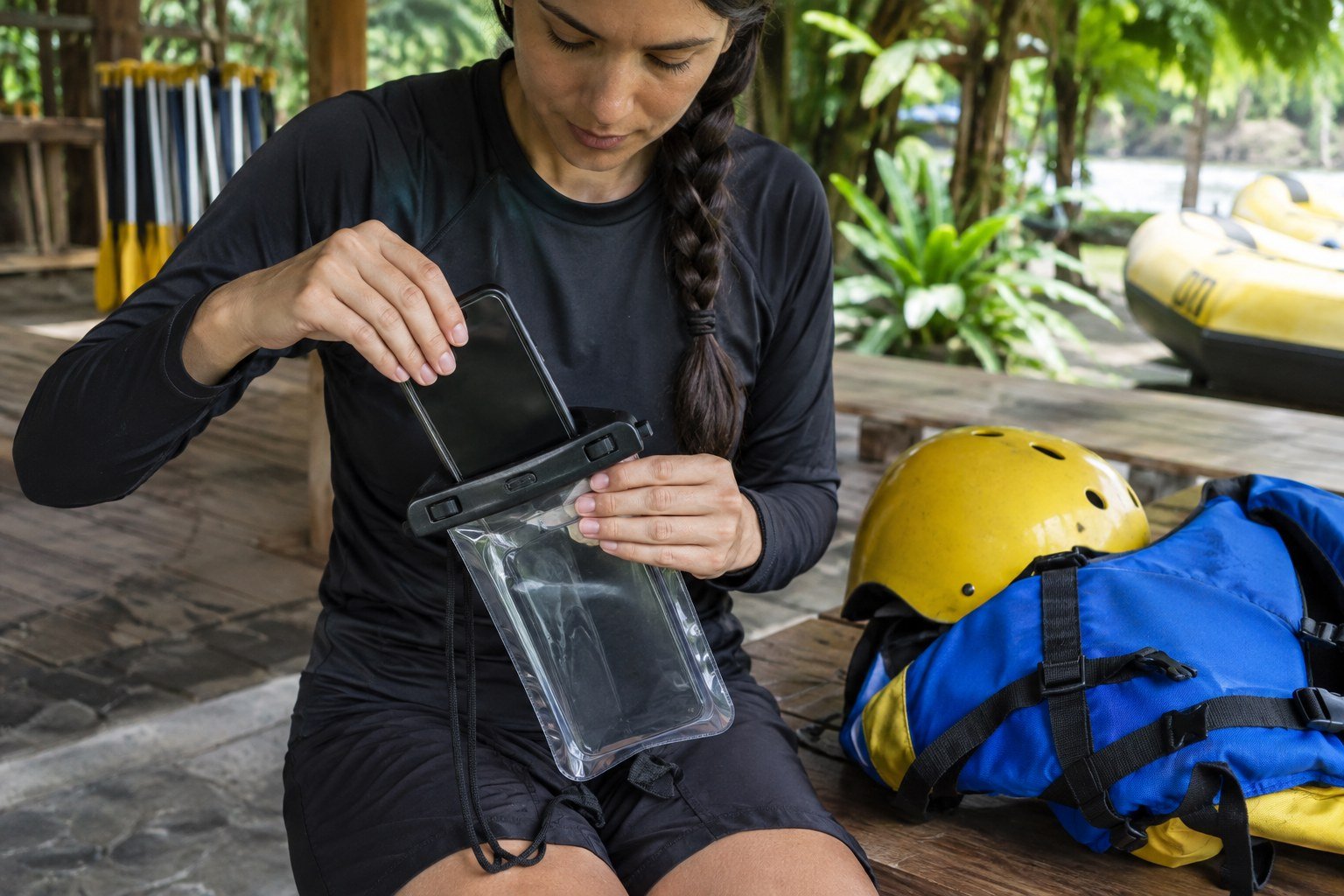
If you want to carry a phone, ask the operator first and use a properly secured waterproof case or pouch designed for water activities. A basic zip bag is not a reliable substitute for tested waterproof protection.
A quality waterproof pouch can help protect a phone from splashes, but it does not remove every risk. The seal may be faulty, the pouch can be punctured, and a phone can still be lost if the pouch is not secured to you properly.
Test the pouch before your trip according to the manufacturer’s instructions, and do not assume that a pouch is suitable for every level of immersion. If the phone is important for travel, payment or contacting family, leaving it stored safely is usually the lower-risk option.
Ask the rafting operator about the storage facilities available at its base. Some rafting packages provide lockers, but facilities and policies can differ. Confirm whether a locker is included, whether you need to bring a small lock, and whether passports, cash, keys and other valuables can be stored securely.
Do not leave a phone or wallet unattended in an open changing area or in a vehicle unless the operator has clearly explained the storage arrangement. Keep only the essentials you need for check-in with you, and follow the staff’s directions.
You may be able to take photos at suitable moments, but do not let photography distract you from the guide’s instructions or the activity. Rapids require attention, and trying to hold a phone while paddling can make it harder to follow commands or keep a secure grip.
Ask your guide when it is appropriate to take pictures. Some operators may have staff or photo services, while others may not. Do not assume photography services are included unless your package says so.
An action camera may be more practical than a phone for water activities, but it still needs a secure mount or tether and suitable waterproof protection. A loose camera can be lost in the river or become a distraction.
Check the operator’s policy before bringing a camera onto the raft. If the guide asks you to put it away, follow the instruction. Safety and the group’s ability to respond to commands matter more than getting a particular shot.
Bring only what you need for check-in and payment. If the operator offers secure storage, use the arrangement it recommends for valuables. For hotel keys, ask whether reception can hold them or whether a key card can be stored safely at the base.
Avoid carrying a passport onto the river unless it is genuinely necessary. If you need identification for check-in, ask the operator what form is accepted before you travel.
Our Bali rafting packing checklist covers other useful items, and our guide to what to wear for rafting in Bali explains how to dress for a wet activity.
Save your hotel details, pickup instructions and operator contact information before the trip. Tell your driver or operator in advance if you have a special reason to keep your phone accessible.
Once you arrive, follow the operator’s advice about where to store it. If you are travelling with someone else, you can also agree on a meeting point and plan for after the activity before putting your phone away.
No single rule applies to every operator. Facilities depend on the base and package, so confirm what is available before booking. The same applies to towels, showers, changing rooms and photo services: check the inclusions instead of assuming they are provided.
For Ayung River rafting, review the current details on our Ayung Rafting page and confirm any questions about storage or personal belongings with the operator before your visit.
You may have opportunities to take photos before entering the water, but keep your footing and pay attention to the path. Some rafting routes involve stairs or uneven ground. Avoid walking while looking at your screen, and put your phone away when you need both hands or when staff are giving instructions.
If you do not need it during the activity, storing it safely at the rafting base is often the simplest option. You can still take pictures before gearing up and after the trip, when you are out of the water and can handle the device more carefully.
For first-time visitors, our article on first-time rafting tips in Bali offers more practical advice on preparing for the experience.
You can bring your phone to the rafting base, but you do not necessarily need to take it onto the river. Keep it stored safely if possible, and confirm the operator’s locker facilities and camera policy before the trip. If you decide to carry a device, use suitable waterproof protection, secure it properly and never let photography distract you from the guide.
For general travel information, visit Indonesia Travel. To review available rafting experiences, visit Bali White Water Rafting Adventure.
Instant confirmation • Licensed operator • Zero stair climb on Ayung
Book Now Chat on WhatsApp